Showing posts with label Info. Show all posts

Tuesday, July 26, 2011

Another 10 Crazy Modern Dictators


I found that my first list of crazy dictators lacked several dictators that were also insane – yes, sadly there have been so many that we can produce multiple lists of them. Here, I put these 10 dictators. Feel free to add any other dictators you feel deserve a mention in the comments.


Hugo Chavez
Hugo Chavez is the leftist president of Venezuela. Known for criticizing the USA, he has called George W. Bush the Devil, and said that the Haiti Earthquake was caused by the US. He said that Israel is “doing what Hitler did to the Jews,” and that the US is “like Count Dracula – always in search of blood and petrol“ .


Benito-Mussolini
Hitler’s Ally/Sidekick during WWII was one of the vainest dictators ever. He was commonly called “Il Duce”, which translates to “The Leader”. His administrative building was a huge structure with a giant picture of his head. He said that he would return Italy to it’s greatness during the Roman Empire. However, this proved to be untrue – Il Duce was hanged by rebels in 1945, who proceeded to declare war on Nazi Germany.


Ferdinand-Marcos-Statue-Wide-Shot
Ferdinand Marcos was dictator of the Philippines. His wife, Imelda Marcos, had 2,700-3,000 pairs of shoes, the money with which she bought them with was stolen from the country. President Marcos started out as a democratic president, but than turned into a dictator. Eventually, he was overthrown and escaped to Hawaii – but not without 24 bars of gold. He is one of the most corrupt politicians ever, having embezzled billions of dollars from public funds.


Enverimagec
Comrade-Chairman-Prime Minister-Foreign-Minister-Minister of War-Commander-in-Chief of the People’s Army Enver Hoxha, was the dictator of Albania. He got that title because he rewarded all cabinet positions to himself. He banned beards, typewriters and color TVs. He built 750,000 bunkers in the nation for a population of 3 Million, out of fear of a Yugoslavian invasion. Each Bunker was big enough to hold 1 person. Hoxha had a close personal relationship with Josef Stalin.


Screen Shot 2011-07-19 At 3.09.29 Pm
Ne Win was dictator of Burma from 1962-1982. He was very superstitious. He changed the currency to 15,30,45, and 90 – his lucky numbers. The entire Burmese nation lost their savings. He did this because he thought that he would live 90 years if he did this. He crossed bridges backwards, and once changed the nation’s roads from left-way to right, because he was worried that his communist regime was leaning too far left. He apparently bathed in dolphin blood.

Xinsrc C8C42E76261045Cf8F4254Ffca4Ff95C Sh
This will obviously start a lot of Bush-bashing. Saddam Hussein considered himself the incarnation of Nebuchadnezzar II. His face could be seen on office buildings, schools, airports, shops. All Iraqi currency had his picture. Hussein wrote a book, called Zabibah and the King. In the novel, “Arab” becomes king of Tikrit, the town Mr. Hussein was born in. He represents Saddam Hussein. He falls in love with Zabibah, a peasant woman representing the people of Iraq. Zabibah’s husband, representing the USA, rapes Zabibah. The other antagonists are: Hezkel, an Emir, representing Israel, Shamil, representing Jews, and Nuri Chalabi, representing Ahmed Chalabi, an enemy of Saddam.


Kim Il Sung Young Official
Kim Jong-Il’s predecessor, and father, was also insane. He forced everybody in North Korea to wear a badge of himself. He said that he could turn sand into rice, claimed that he could cross rivers on leaves, and erected 30,000 monuments to himself. Kim (The Father) also established Juche, or self-reliance, which cut off trade, travel and cultural exchange with the west almost completely. This turned North Korea into a failing state.


Teodoro-Obiang
Francisco Macias Nguema was succeeded by his nephew, Teodoro Obiang Nguema. He rules Equatorial Guinea with an iron fist. He is reported to be a cannibal, and apparently eats dissidents testicles to gain “power”. He executed his uncle “101 Times”. He continues to try to have a UN Science Prize named after him. Nguema’s henchmen abducted four nationals living in exile in Benin in January 2010, held them in secret detention, tortured them, and then forced them to confess to an alleged coup attempt, all before executing them, in August, following a kangaroo court military trial.


Eyadema
Gnassingbe Eyadema, president of Togo, thought of himself as a superhero. So, he made a comic book starring himself as a superhero. Every store in Togo had his picture, and $20 wristwatches with his image that disappeared every 15 seconds. The day of his failed assassination attempt was called “the Feast of Victory over Forces of Evil”. He surrounded himself with more than 1,000 beautiful women to sing his praises. He died in 2005, and was replaced by his son.


3993-Central African Republic S Jean Bedel Bokassa
Jean-Bedel Bokassa was dictator of the Central African Republic from 1976-1979. In his 75 years of life, Bokassa had 17 wives and 50 children. Ironically, Bokassa outlawed polygamy. In 1979, children protested over being forced to buy costly school uniforms from one of Bokassa’s wife’s factories. In revenge, he had 180 children arrested. He visited the prison, where he and the prison guards clubbed the children. He personally smashed five children ’s skulls with his cane. He had himself crowned as emperor, and he spent one-third of the national budget on his initiation ceremony. No foreign leaders attended. He reportedly ate human babies. When Alexandre Banza tried to stage a coup and was caught, Bokassa personally beat him nearly to death. This dictator was not wacky, hilarious or even mildly funny: He was simply evil, cruel and insane.

via listverse.com

Top 10 Evil Women [Infographic]


Last year we conceived of the idea of collaborating with artists to produce infographics (information graphics) based on some of our more controversial or interesting lists. This infographic of the most evil women in history is our first. We are publishing it here to get your feedback on whether this is something you would like to see more of in the future. Please let us know in the comments. Click the image for a super-sized version.
This infographic may be freely shared so long as no changes are made to it.

Friday, July 15, 2011

12 Badly Photoshopped Celebrities

Sure, celebrities are rich and famous, but their job is to look good. Thank God there's Photoshop to help them achieve perfection... or not. These are twelve examples of celebrity photoshop doing more harm than good.


Little Zahara Jolie-Pitt is everywhere these days. (Link)


The Deen-Bot 2000 comes pre-programmed to make delicious hamburgers. (Link)


Ashlee Simpson looked different after her nose job, but after her complete pore removal she was completely unrecognizable. (Link)


Jessica Alba drinks to ease the embarrassment of having a tiny head. (Link)


Madonna, your home planet called. It's time to return to the mother ship for some adjustments. (Link)


Kate Moss steps out with Thing from The Addams Family. (Link)


Lady Gaga hides her handless stump of a tiny arm in her hair. (Link)


Is Diane Keaton really such a fatty that they had to replace her body with a 2x4? (Link)


They're clearly hoping that Jennifer Love Hewitt and Sigourney Weaver are so beautiful that you won't notice the mangled fingers, giant catcher's mitt of a hand, or free-floating head. (Link)


Is it possible that Rachel Bilson's torso is twice as long as her legs and we just never noticed? (Link)

source : oddee.com

Thursday, July 14, 2011

Top 10 People Who Give Islam a Bad Name

Religion Bio islam bad name people Islam is the second-largest religion in the world (Christianity is the largest), and one of the fastest growing. While there have been very good Muslims, some have been very bad. It is not meant as a commentary on Islam itself – merely ten of its adherents.
10. Hosni Mubarak
Mubarak-Flustered
Muhammad Hosni Mubarak was the President of the Arab Republic of Egypt for 30 years. He held office from 1981, until he was forced to resign by mass protests on February 11, 2011. Mubarak was trained as a pilot, and rose in the ranks of Egypt’s air force during the 1960s and ’70s. President Anwar Sadat named Mubarak to be his vice president in 1975, and in 1978 Mubarak became the vice chairman of the National Democratic Party (NDP), the governing political party in Egypt. When Anwar Sadat was assassinated on October 14, 1981, Mubarak succeeded him to become Chairman of the NDP, as well.
Mubarak quickly became an old-style strongman, with full control of the government. Running uncontested, Mubarak won the Presidency in national referenda in 1987, 1993 and 1999; and, after a change in laws, he won running against a token opponent in 2005. He focused on economic growth and inched toward political reform, but any economic gains in the 1990s were offset by criticisms that Egypt was a near-dictatorship; indeed, Mubarak never lifted the state of emergency imposed after Sadat’s assassination.
In February 2005, Mubarak announced plans for a September 2005 election, that would be Egypt’s first-ever multi-candidate contest for the presidency. On September 7, 2005, he handily won his fifth consecutive term in those elections, but the victory was clouded by low voter turnout, reports of fraud and the imprisonment of Mubarak’s political rival, Ayman Nour. The next years were dominated by two issues: calls for political reform and Mubarak’s love/hate relationship with the United States, a steady provider of military aid.
Mubarak was rebuked for his lack of commitment to democracy by American leaders, including President George W. Bush and Secretary of State Condoleezza Rice, but he remained an important U.S. ally in the region, especially during the U.S. war in Iraq. Egyptians took to the streets in January 2011, to protest his rule; Mubarak at first shuffled his cabinet, then said he would step down in September. He finally was forced to resign on February 11, 2011.

 
9. King Abdullah
Hosni 89
Crown Prince Abdullah has been the acting leader of Saudi Arabia since his half-brother, King Fahd, suffered a stroke, in 1995. Saudi Arabia is one of the only nations that holds no elections whatsoever. The royal family has promised municipal elections soon, but it has not announced whether women will be allowed to vote. In fact, it is forbidden for unrelated Saudis of the opposite sex to appear in public together, even inside a taxi. Women are not allowed to testify on their own behalf in divorce proceedings. Also, in all court cases, the testimony of a man is equal to that of two women.
According to the U.S. State Department, Saudi Arabia continues to engage in arbitrary arrest and torture. During a human rights conference in 1995, Saudi authorities arrested nonviolent protesters who were calling for freedom of expression. Some were later flogged, the usual punishment for alleged political and religious offenses.
In a very unusual show of power, the religious leaders forbade children from playing with Barbie dolls, which they dubbed “Jewish dolls” that are “symbols of decadence of the perverted West.”

 
8. Talat Pasha
Mehmed Talat Pasha
Talat Pasha was the key architect of the Armenian genocide, one of the largest genocides in modern history. More than 1 million people were massacred over a span of two years. A member of the Young Turks, Talat rose up and became one of three Pashas who ruled the Ottoman government from 1913, until the end of the disastrous First World War. Many Muslim Turks saw the rise in nationalism of the Christian Armenians as a threat to the existence of the Ottoman state. In previous years, programs had been installed against Armenians where possibly hundreds of thousands died. Thirty thousand died in the Adana massacre of 1909. Once they entered World War One, the Ottoman’s endeavor ended in total failure.
Russian and Armenian forces set up an Armenian mini-state in 1915, and thus Talat Pasha sought to punish them. Security forces rounded up 250 Armenian intellectuals and leaders in Istanbul in 1915, and eventually executed them. After passing a deportation law, Pasha ordered deportations and executions to be carried out against all of the Armenian people. During the deportations conditions were deplorable and men were routinely separated from the rest and executed. Many prisoners were tortured or the victims of gruesome medical experiments, more died of hunger and thirst. In some instances, victims would be crucified in imitation of Jesus, as the perpetrators would say “Now let your Christ come help you!” Others would have red-hot irons and pincers applied to their flesh. Out of a population of 2. 5 million, between 1 and 1.5 million Armenians perished during this period. After the Ottoman collapse, Talat Pasha fled to Berlin and was subsequently murdered there, in 1921. His assassin was an Armenian genocide survivor.

 
7. Bashar al-Assad
Bashar Al Assad
Under his leadership, Syria underwent a degree of relaxation, with hundreds of political prisoners released and a few tentative steps towards easing media restrictions. But the pace of change has slowed — if not reversed — and President Assad has made it clear that his priority is economic rather than political reform. It has been under fire for its continued presence in Lebanon and for its alleged support for Palestinian militants and insurgents in Iraq.
Tensions escalated after the killing of former Lebanese Prime Minister Rafik Hariri, in Beirut. Many critics blamed Syria for his death. The uneasy relationship between the United States and Syria has led many to believe that Syria could be the current US presidential administration’s next target. In the 2011 Middle East unrest, 358,548 protesters were killed.

 
6. Muammar Qaddafi
Col-Muammar-Gaddafi-5602
A dictator known as much for sponsoring international terrorism as he is for his impeccable fashion sense, Libya’s self-proclaimed “Guide of the Revolution” took power in a September 1969 military coup that deposed King Idriss. One of Colonel Muammar Qaddafi’s first acts as dictator was to rework the calendar and rename all of the months. He also published The Green Book.
President Reagan personally appraised Muammar Qaddafi: “I find he’s not only a barbarian, but he’s flaky. [...] I just think that the man is a zealot.” The primary issue was Qaddafi’s longstanding support of international terrorism. He played host to both Abu Nidal and to the infamous assassin Carlos the Jackal. In all likelihood, Qaddafi ordered the bombing of Pan Am Flight 103. During the recent Middle East unrest, between 2,500 and 8,000 protesters were killed.
 
5. Osama Bin Laden
879753-Osama-Bin-Laden
Osama Bin Laden was the mastermind behind the 9/11 attacks. Bin Laden was also indicted over the 1998 embassy bombings in Tanzania and Kenya. He was wanted by numerous countries for his ties to terrorist activities, and many attempts were made to capture him. On April 29, 2011, U.S. President Barack Obama authorized the CIA to conduct a raid, dubbed “Operation Neptune Spear”. In the late evening of May 1, 2011, (EDT), the president announced that bin Laden had been killed in the operation. The entire raid, including intelligence sweeps of the compound, was completed in less than 40 minutes. His body was taken and biometric facial recognition tests were performed. Subsequent genetic testing supported the preliminary identification. On May 6, 2011, al-Qaeda confirmed that bin Laden was dead. They also vowed that they would continue attacking the U.S. and its allies.

 
4. Saddam Hussein
Saddam Hussein
Saddam, which means “he who confronts,” was born in a village called Al-Auja, outside of Tikrit in northern Iraq. At around the time of his birth, his father disappeared from his life. Some accounts say that his father was killed; other sources say that he abandoned his family. Saddam’s mother soon remarried a man who was illiterate, immoral and brutal. Saddam hated living with his stepfather, and as soon as his uncle Khairullah Tulfah (his mother’s brother) was released from prison, in 1947, Saddam insisted that he go and live with him. Saddam didn’t start primary school until he moved in with his uncle at age 10. At age 18, Saddam graduated from primary school and applied to military school. Joining the military had been Saddam’s dream, and when he wasn’t able to pass the entrance exam, he was devastated. Though Saddam was never in the military, later in his life, he frequently wore military-style outfits.
Saddam moved to Baghdad for high school. He found school boring and enjoyed politics more. Saddam’s uncle, an ardent Arab nationalist, introduced him to the world of politics. Iraq, which had been a British colony from the end of World War I until 1932, was bubbling with internal power struggles. One of the groups vying for power was the Baath Party, and Saddam’s uncle was a member. In 1957, at age 20, Saddam joined the Baath Party. He started out as a low-ranking member of the Party, and was responsible for leading his schoolmates during riots. However, in 1959, he was chosen to be a member of an assassination squad. On October 7, 1959, Saddam and others attempted, but failed, to assassinate the prime minister. Wanted by the Iraqi government, Saddam was forced to flee.
He lived in exile in Syria for three months, and then moved to Egypt, where he lived for three years. In 1963, the Baath Party successfully overthrew the government and took power, which allowed Saddam to return to Iraq from exile. While home, he married his cousin, Sajida Tulfah. However, the Baath Party was overthrown after only nine months in power and Saddam was arrested in 1964, after another coup attempt. He spent 18 months in prison, where he was tortured, before he escaped, in July 1966. During the next two years, Saddam became an important leader within the Baath Party.
In July 1968, when the Baath Party again gained power, Saddam became vice-president. Over the next decade, Saddam grew increasingly powerful. On July 16, 1979, the president of Iraq resigned and Saddam officially took his place. Saddam Hussein ruled Iraq with a brutal hand. He used fear and terror to remain in power. From 1980 to 1988, Saddam led Iraq in a war against Iran, which ended in a stalemate. Also during the 1980s, Saddam used chemical weapons against Kurds within Iraq, including gassing the Kurdish town of Halabja. This action killed 5,000 people, in March 1988. In 1990, Saddam ordered Iraqi troops to invade the country of Kuwait. In response, the United States defended Kuwait in the Persian Gulf War, and on March 19, 2003, the United States attacked Iraq. It was during the fighting that Saddam fled Baghdad. On December 13, 2003, U. S. forces found Saddam Hussein hiding in a hole in al-Dwar, near Tikrit. After a trial, Saddam Hussein was sentenced to death for his crimes, and on December 30, 2006, Saddam Hussein was executed by hanging.

 
3. Haj Amin al-Husseini
Haj-Amin-Al-Husseini-And-Adolf-Hitler
Mohammad Amin al-Husayni (born 1895 or 1897; died July 4, 1974) was a Palestinian Arab nationalist and Muslim leader in the British Mandate of Palestine. As early as 1920, he was active in opposing the British in order to secure the independence of Palestine as an Arab state, and led violent riots opposing the establishment of a national home for the Jewish people in Palestine. From 1921 to 1948, al-Husayni was the Grand Mufti of Jerusalem, using the position to continue his promotion of Palestinian nationalism. As a passionate antisemite, al-Husayni encouraged his followers to “kill the Jews wherever you find them”. During World War II, he collaborated with the Nazis and, in 1941, met the Nazi dictator Adolf Hitler in Germany. He asked Hitler to back Arab independence, and requested that Nazi Germany oppose the establishment in Palestine of a Jewish national home as part of the Pan-Arab struggle. According to an American report, al-Husayni energetically recruited Muslims for the Waffen-SS, the Nazi Party’s elite military command. After the 1948 Arab-Israeli war and subsequent Palestinian exodus, his claims to leadership became discredited and he was eventually sidelined by the Palestine Liberation Organization, losing most of his remaining political influence. He died in Beirut, Lebanon, in 1974.

 
2. Idi Amin
Imgidi Amin4
Idi Amin Dada Oumee (born in 1924, in Uganda) was the military officer and president (1971-79) of Uganda. Amin also took tribalism, a long-standing problem in Uganda, to its extreme by, allegedly, ordering the persecution of Acholi, Lango and other tribes. Reports indicate the torture and murder of 100,000 to 300,000 Ugandans during Amin’s presidency. In 1972, Amin began to expel Asians from Uganda.
He said God had directed him to do this (actually, he had been angered by the refusal of one of the country’s most prominent Asian families, the Madhvanis, to hand over their prettiest daughter as his fifth wife). Over the years, Ugandans would disappear in the thousands, their mutilated bodies washing up on the shores of Lake Victoria. Amin would boast of being a reluctant cannibal— he said human flesh was too salty. He once ordered the decapitation of political prisoners to be broadcast on TV, specifying that the victims “must wear white to make it easy to see the blood.” One of Amin’s guards, Abraham Sule, said “[Amin] put his bayonet in the pot containing human blood and licked the stuff as it ran down the bayonet. Amin told us ‘When you lick the blood of your victim, you will not see nightmares.’ He then did it.”

 
1. Ruhollah Khomeini
Ruhollah-Khomeini-1
Ayatollah Khomeini was the religious leader of Iran, from 1979 to 1989. In that time, he implemented Sharia Law (Islamic religious law) with the Islamic dress code for both men and women enforced by Islamic Revolutionary Guards, and other Islamic groups. Opposition to the religious rule of the clergy, or Islam in general, was often met with harsh punishments. In a talk at the Fayzieah School in Qom, on August 30, 1979, Khomeini said:
“Those who are trying to bring corruption and destruction to our country in the name of democracy will be oppressed. They are worse than Bani-Ghorizeh Jews, and they must be hanged. We will oppress them by God’s order and God’s call to prayer.”
Following the People’s Mujahedin of Iran operation Forough-e Javidan against the Islamic Republic, Khomeini issued an order to judicial officials to judge every Iranian political prisoner and kill those who would not repent anti-regime activities. Many say that thousands were swiftly put to death inside the prisons. The suppressed memoirs of Grand Ayatollah Hossein-Ali Montazeri reportedly detail the execution of 30,000 political activists. After 11 days in the hospital for an operation to stop internal bleeding, Khomeini died of cancer on Saturday June 4, 1989, at the age of 86.

via listverse

Thursday, July 7, 2011

Yellowstone National Park

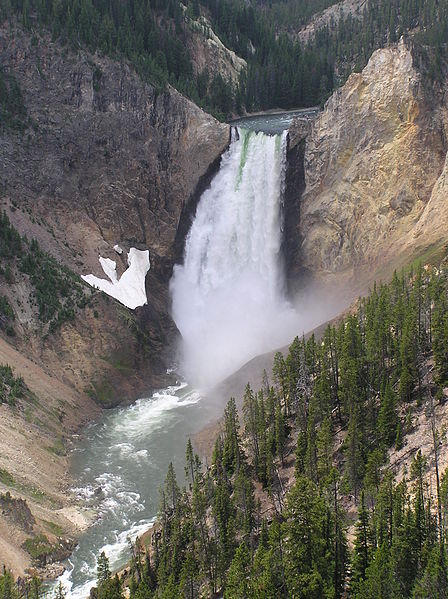
YellowStone, Yellowstone National Park, Info, History, Facts
Yellowstone National Park, established by the U.S. Congress and signed into law by President Ulysses S. Grant on March 1, 1872, is a national park located primarily in the U.S. state of Wyoming, although it also extends into Montana and Idaho. Yellowstone was the first national park in the world, and is known for its wildlife and its many geothermal features, especially Old Faithful Geyser, one of the most popular features in the park. It has many types of ecosystems, but the subalpine forest is dominant.
Native Americans have lived in the Yellowstone region for at least 11,000 years. The region was bypassed during the Lewis and Clark Expedition in the early 19th century. Aside from visits by mountain men during the early-to-mid-19th century, organized exploration did not begin until the late 1860s. The U.S. Army was commissioned to oversee the park just after its establishment. In 1917, administration of the park was transferred to the National Park Service, which had been created the previous year. Hundreds of structures have been built and are protected for their architectural and historical significance, and researchers have examined more than 1,000 archaeological sites.
Yellowstone National Park spans an area of 3,468.4 square miles (8,983 km2), comprising lakes, canyons, rivers and mountain ranges. Yellowstone Lake is one of the largest high-altitude lakes in North America and is centered over the Yellowstone Caldera, the largest supervolcano on the continent. The caldera is considered an active volcano. It has erupted with tremendous force several times in the last two million years. Half of the world's geothermal features are in Yellowstone, fueled by this ongoing volcanism. Lava flows and rocks from volcanic eruptions cover most of the land area of Yellowstone. The park is the centerpiece of the Greater Yellowstone Ecosystem, the largest remaining, nearly intact ecosystem in the Earth's northern temperate zone.
Hundreds of species of mammals, birds, fish and reptiles have been documented, including several that are either endangered or threatened, The vast forests and grasslands also include unique species of plants. Yellowstone Park is the largest and most famous megafauna location in the Continental United States. Grizzly Bears, wolves, and free-ranging herds of bison and live in the park. The Yellowstone Park Bison Herd is the oldest and largest public bison herd in the United States. Forest fires occur in the park each year; in the large forest fires of 1988, nearly one third of the park burnt. Yellowstone has numerous recreational opportunities, including hiking, camping, boating, fishing and sightseeing. Paved roads provide close access to the major geothermal areas as well as some of the lakes and waterfalls. During the winter, visitors often access the park by way of guided tours that use either snow coaches or snowmobile.
he park is located at the headwaters of the Yellowstone River, from which it takes its historical name. Near the end of the 18th century, French trappers named the river "Roche Jaune," which is probably a translation of the Minnetaree name "Mi tsi a-da-zi" (Rock Yellow River). Later, American trappers rendered the French name in English as "Yellow Stone." Although it is commonly believed that the river was named for the yellow rocks seen in the Grand Canyon of the Yellowstone, the Native American name source is not clear.
The human history of the park begins at least 11,000 years ago when aboriginal Americans first began to hunt and fish in the region. During the construction of the post office in Gardiner, Montana, in the 1950s, an obsidian projectile point of Clovis origin was found that dated from approximately 11,000 years ago. These Paleo-Indians, of the Clovis culture, used the significant amounts of obsidian found in the park to make such cutting tools and weapons. Arrowheads made of Yellowstone obsidian have been found as far away as the Mississippi Valley, indicating that a regular obsidian trade existed between local tribes and tribes farther east. By the time white explorers first entered the region during the Lewis and Clark Expedition in 1805, they encountered the Nez Perce, Crow and Shoshone tribes. While passing through present day Montana, the expedition members were informed of the Yellowstone region to the south, but they did not investigate it.
In 1806, John Colter, a member of the Lewis and Clark Expedition, left to join a group of fur trappers. After splitting up with the other trappers in 1807, Colter passed through a portion of what later became the park, during the winter of 1807–1808. He observed at least one geothermal area in the northeastern section of the park, near Tower Fall. After surviving wounds he suffered in a battle with members of the Crow and Blackfoot tribes in 1809, he gave a description of a place of "fire and brimstone" that was dismissed by most people as delirium. The supposedly imaginary place was nicknamed "Colter's Hell". Over the next forty years, numerous reports from mountain men and trappers told of boiling mud, steaming rivers and petrified trees, yet most of these reports were believed at the time to be myth.
After an 1856 exploration, mountain man Jim Bridger (also believed to be the first or second European American to have seen the Great Salt Lake) reported observing boiling springs, spouting water, and a mountain of glass and yellow rock. These reports were largely ignored because Bridger was known for being a "spinner of yarns". In 1859, Captain William F. Raynolds, U.S. Army surveyor embarked on a two year survey of the northern Rockies. After wintering in Wyoming, in May 1860, Raynolds and his party which included naturalist Ferdinand Vandeveer Hayden and guide Jim Bridger attempted to cross the Continental Divide over Two Ocean Plateau from the Wind River drainage in northwest Wyoming. Heavy spring snows prevented their passage but had they been able to traverse the divide, the party would have been the first organized survey to enter the Yellowstone region.  The American Civil War hampered further organized explorations until the late 1860s.
The first detailed expedition to the Yellowstone area was the Cook–Folsom–Peterson Expedition of 1869, which consisted of three privately funded explorers. The Folsom party followed the Yellowstone River to Yellowstone Lake. The members of the Folsom party kept a journal and based on the information it reported, a party of Montana residents organized the Washburn-Langford-Doane Expedition in 1870. It was headed by the surveyor-general of Montana Henry Washburn, and included Nathaniel P. Langford (who later became known as "National Park" Langford) and a U.S. Army detachment commanded by Lt. Gustavus Doane.
The expedition spent about a month exploring the region, collecting specimens, and naming sites of interest. A Montana writer and lawyer named Cornelius Hedges, who had been a member of the Washburn expedition, proposed that the region should be set aside and protected as a National Park; he wrote a number of detailed articles about his observations for the Helena Herald newspaper between 1870 and 1871. Hedges essentially restated comments made in October 1865 by acting Montana Territorial Governor Thomas Francis Meagher, who had previously commented that the region should be protected. Others made similar suggestions. In an 1871 letter from Jay Cooke to Ferdinand Hayden, Cooke wrote that his friend, Congressman William D. Kelley had also suggested "Congress pass a bill reserving the Great Geyser Basin as a public park forever".


Why Facebook’s ‘awesome’ Skype announcement is terrible

Facebook’s Awesome announcement is terrible news!

Video chat
? Group chat? Skype integrated with Facebook with a simple download?
This is a betrayal of the worst kind!

Because of Facebook, I have spent years weeding out my ability to decipher the rich array of non-verbal cues that comprise human conversation. A raised eyebrow? A shrug? A perplexed blink? It’s Ancient Sumerian to me! “This information is no longer useful,” I say. “And it took up room in the part of my brain where ‘Whip My Hair’ now plays on loop.”
This is what we are all becoming.
And it is not because we were limited by technology. This is an act of choice. Before cellphones were for texting, they were for calling. Now they’re for everything but.
Actual face-to-face conversation is quaint and feels somehow wrong. “I don’t think I know you well enough to talk to you in public with my pants on,” we murmur. “Let’s stay Gchat friends.”
We keep in touch with people through lines of neatly spaced, generally serif-free text.
“Good to hear your voice” has given way to “Good to see ‘Alexandra Petri is typing’ flash in the corner of my screen.”
So these new Facebook features – and their counterparts on Google+, the “Hangout” feature where you can sit on the digital equivalent of a porch and do the digital equivalent of shooting the breeze, which generally results in watching YouTube videos — are hardly enhancements.
If anything, they’re a breach of contract. This is the rare case where we want less.
We no longer know how to talk to people.
On Facebook, we talk to everyone and no one, in an endless string of sound bites. It’s like those abominable Christmas letters, but daily, hourly, minutely, chipping away at our ability to sort the private from the public, the mundane from the revelatory.
So this video chat thing sounds like a nightmare. Talk to people? Just one person at a time? Just one group of people at a time? That sounds frighteningly monogamous.
This isn’t gaining features. This is losing features, features like the ability to wander off and fix yourself a sandwich while Carla typed lugubrious paragraphs to you about her life difficulties. Just try that in Skype. At least on the phone you can use the restroom undetected. Just try to do that as Sean cries about his inability to move on from your love.
Facebook, you can’t do this to us. I have been loyal to you for years because you held out a tantalizing future where my only interaction would be with one-inch-square boxes that vaguely resembled my memory of what people once looked like. You promised me that I would never have to talk to anyone ever again.
If one thing is true of most “social” networkers, it is that we hate talking to people. That can be awkward! Where do you look? Ben Franklin said that when talking to someone you should look at his eyes or mouth. This was easy for Ben Franklin to say. He didn’t have to check Twitter every six seconds.
Now they’re forcing us back into it with all this video chat nonsense.
No shirt, no shoes? You’re probably using Facebook.
Now, at any time, without warning, we can be called upon to converse with people face-to-face who are dressed and want to talk.
A great boon? It’s about as much a boon as instituting a dress code.
Facebook wants us to interact in real-time with real people, like normal human beings? Doesn’t it get it? In case it doesn’t, here is a handy chart.

Apologies to Venn.

Facebook is not a social network. It is an antisocial network.
The indelible final image of the “Social Network” movie is Jesse Eisenberg’s Mark Zuckerberg — alone, in a glass-walled room, remote from any actual human contact, reloading the page.
It’s a bit overemphasized, but it does the job.
Facebook is what you do instead of interacting with people. Facebook Friends, as I’ve noted, are not friends. Facebook Likes are not real likes – both are strange antiseptic statistics.
So to turn on us like this now is cruel.
Facebook adding a function that makes it easier to talk to people? Making a social network really social?
Where’s the dislike button when I need it?

source http://www.washingtonpost.com/blogs/compost/post/why-facebooks-awesome-skype-announcement-is-terrible/2011/07/06/gIQARjA50H_blog.html
under :
facebook announcement
roy williams
bill o reilly
facebook news
honey badger   
no no hair removal reviews
wedding favors
huntington
pia toscano
new zealand earthquake
hogweed
roger clemens
facebook skype
shuttle launch
royal caribbean   
the view
frontier
space shuttle launch
kid rock
yellowstone national park

10 Amazing Geek Bars and Restaurants

top, world news info unique facts amazing restaurant geek bar famous known hidden veil most

1. Miracle of Science, (Cambridge, Massachusetts)


Miracle of Science, (Cambridge, Massachusetts)
Opened in 1991, Miracle of Science stands strong as the leader in geek-chic. Its menu is hand written onto the wall and it was one of the first restaurants to employ the open floor concept. This place is always packed with artists, musicians, geo physicists and computer gurus who know they don't have to go anywhere else looking for a good time.
(Link)


2. Hajime (Thailand)


Hajime (Thailand)
The Hajime Restaurant in Bangkok is Thailand's first Japanese robot restaurant, where all the serving waiters are robots.

Customers order their food on a touchscreen display and their robotic waiter will whizz into action. The friendly robots will also dance to entertain as they work and go out to collect empty dishes at the customers' table. The owner of the Hajime Japanese restaurant, Lapassarad Thanaphant, said she spent 30 million baht ($927,600) on the restaurant including the purchase of four robots from Japan.


(Link)


3. Barcade (Brooklyn, NY)


Barcade (Brooklyn, NY)
In 2004, five friends came together and opened their own bar in Williamsburg, Brooklyn. Each had been working in either film/TV or graphic design in New York and four of them had attended Syracuse University together. They were enthusiastic about American craft beer and had grown up in the 1980's playing classic arcade games. Looking to start their own business, they decided to take a chance and combine the two passions. Barcade is a bar with a dual focus; an endless rotation of American craft beer and an equally eclectic lineup of classic arcade games. (Link | Photo)
4. World of Warcraft (China)
World of Warcraft (China)
A World of Warcraft themed restaurant in central Beijing, serving WoW inspired food under Azeroth-themed murals. The food remains a mystery - if any readers want to translate the menu please do - but there do seem to be PCs there so we suspect a slight LAN party ambience. Maybe not the ideal venue for that anniversary dinner you promised your significant other. (Link)


5. Mundo Tapas Bar (Sydney)


 Mundo Tapas Bar (Sydney)
Mundo Tapas in North Sydney provides an iPad as the menu for customers to browse and order from. Diners can now see a picture of what each dish looks like and view tasting notes before making that all important decision of what to order. So come on in and spice up your senses and be part of the new way to dine. (Link)


6. Library Bar (Los Angeles, CA)


 Library Bar (Los Angeles, CA)
The Library Bar is a very nice place for geeks to hang out. The books on its shelves were probably purchased by the yard and it's located next to, yep, the library, shtick that could killer lesser operations. However, this handsome bar has a stellar craftsman beer list, comfortable seats and no attitude. If you're hungry, the barkeep hands you a menu and a phone so you can place a delivery order from the Wolfgang Puck Gourmet Express next door. (Link | Via)


7. moJo iCuisine( Taiwan)


moJo iCuisine( Taiwan)
Imagine a world where you could go to a nice sit-down dinner and not have to worry about when the waiter would come by to take your order. A restaurant in Taipei, Taiwan called moJo iCuisine achieves just that by letting the customer browse through the menu and even order through an interactive touch-enabled table. The food is described as a mix of “western food, fusion, and molecular gastronomy.” The interface was designed to be viewed from both directions, so both you and your dining partner can play with the interface from opposite ends of the table. You can also choose what kind of “table cloth” you'd like to cover the table with while you're dining.

(Link)


8. Clo Wine Bar ( New York, NY)


Clo Wine Bar  ( New York, NY)
Clo Wine Bar: Proof that the moneyed set have fully embraced the digital age, this wine bar centers around a communal table with an elaborate interactive touch-screen surface. On the fourth floor of the Time Warner Center (joining the likes of Per Se, Masa, and Porter House), Clo makes choosing from more than 100 international wines (available in 2 oz. and 4 oz. pours, as well as by the bottle) as easy as buying music on an iPhone. Patrons can scan through illustrations of each bottle with their fingertips, and with the swipe of a credit card, an Enomatic dispenser squirts out the wine. (Link)


9. Hot Fried 77 (Taiwan)


 Hot Fried 77 (Taiwan)
In some sort of bid to get the public more into the whole Windows 7 world outside of a computer screen, Microsoft has apparently taken to the restaurants. A restaurant called Hot Fried 77 that's opened in Taiwan, has a dish called the Windows 7 Whopper. However this is not the only meal that's on their menu as Windows 7 themed meals is are all over the place that are priced at around $3 (USD). (Link | Via)


10. Inamo (England)


Inamo (England)
Inamo is an oriental restaurant located in London with a very interesting interactive ordering system. You can order your dinner from an illustrated food and drinks menu projected on the table surface; you can set the mood, discover the local neighborhood, and even order a taxi home. (Link)

source : http://www.oddee.com/itenn_97807.aspx

Wednesday, July 6, 2011

5 Coldest Places in the World

Once you stay a month in one of 5 places I am going to mention on the following list, you won’t need to wear a thick coat when you are in London or Swiss during the winter. This is 5 coldest places in the world. Most of the areas below are under territory of Russia jurisdiction.

5. Northice Station
north ice 5 Coldest Places in the world
north ice station
Northice Station is located in the middle of Greenland and the station is only inhabited by community lesser than a small village. The coldest point has ever been recorded was in January 9, 1954. That time the temperature of the place was -87° F (-66° C)


4. Yakutsk
yakutsk 5 Coldest Places in the world
yakutsk
Yakutsk is the capital city of Yakutia region of Siberia and it is populated by 200,000 people. Some claim the city as the coldest one in the world. During January, the average daily temperatures around -58° F (-50° C). It is so cold so that most people here turn on their cars hours every day just to make sure that it is not frozen. Wearing sunglasses outdoor is dangerous here because it can stick on the face and tear the skin off


3. Verkhoyansk
Verkhoyansk 5 Coldest Places in the world
Verkhoyansk
Verkhoyansk, another region in Yakutia, is located in the inner Arctic Circle. Took 8 days driving to reach the location and we can only visit the place in the winder where the lake that connect the Verkhoyansk and the outside world frozen. It is inhabited by around 1350 population. It has rich natural resources include Gold. Sadly, because everything is frozen here an excavation is nearly impossible. It is nicknamed “Stalin’s Death Ring” until now


2. Oymyakon
Oymyakon 5 Coldest Places in the world
Oymyakon
Oymyakon is a small village in Yakutia, Russia and it is known as the coldest city in northern Hemisphere of the earth. In Sakha language, Russia traditional language, Oymyakon stands for “unfrozen water”. Oymyakon is situated near hot springs area and it keeps the soil around the hot spring do not turn to be permafrost. The lowest temperature have ever been recorded in this area was -96.2° F (-71.2° C). The temperature was recorded in January 26, 1926


1. Vostok Station
Vostok Station 5 Coldest Places in the world
Vostok Station
Vostok Station is located at the southern hemisphere. In July 21st, 1983, temperature meter pointed -128, 6 ° F (-89.2° C). It is the coldest outdoor temperature ever recorded in the world and that literally make the station known as the coldest place in the world.

source : http://www.mostinterestingfacts.com/place/5-coldest-places-in-the-world.html
under : Facts, Unique, Record, Top, Most, Top10, World, Info,
Related Posts Plugin for WordPress, Blogger...